
First Notice of Loss in Small Insurance Agencies: An AI Agent Routing Pattern That Respects Adjuster Authority
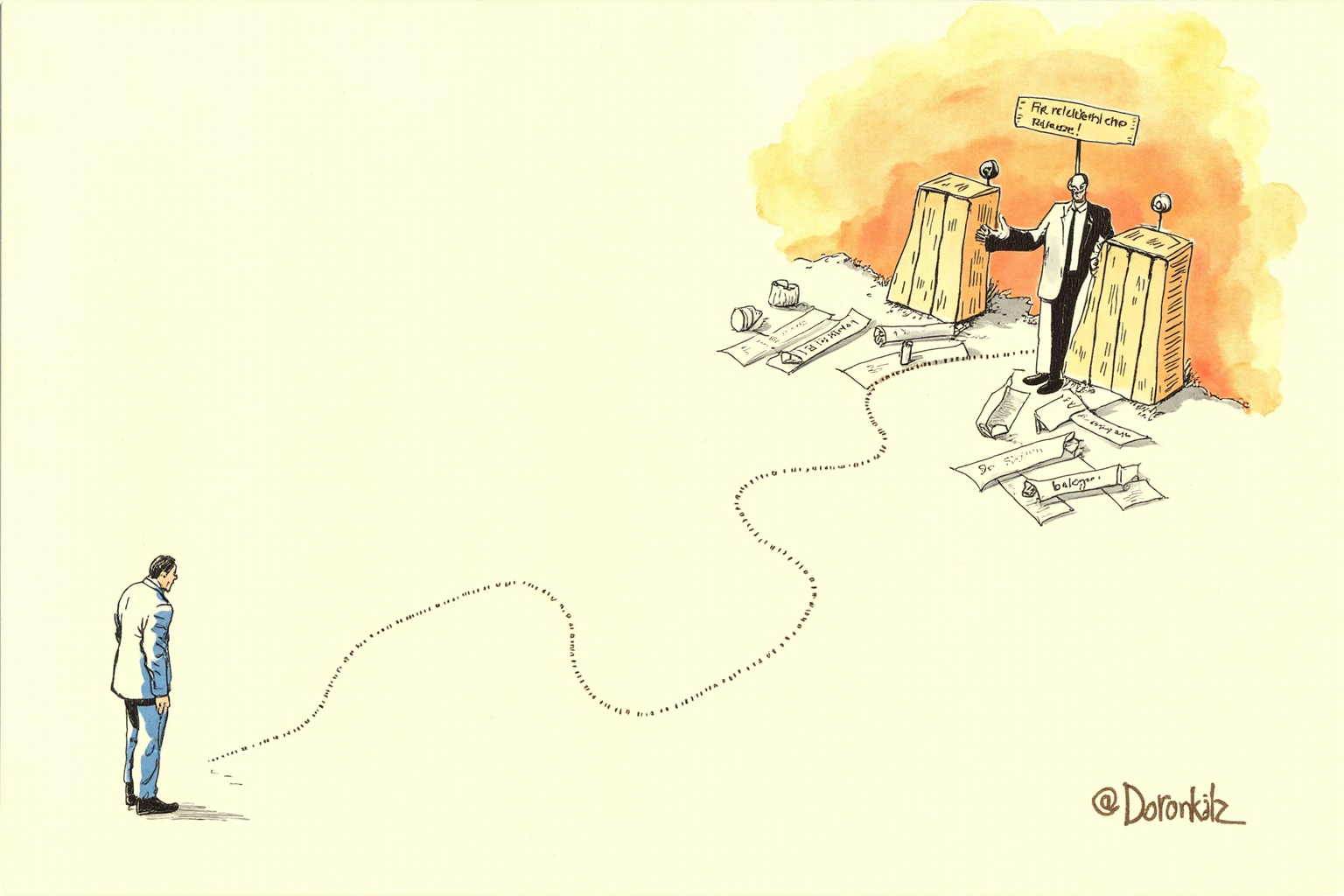
THE 90-SECOND BOUNDARY
A first notice of loss call is the moment a small insurance agency either keeps a policy or quietly loses it. First Notice of Loss is the policyholder's initial contact with the carrier after an incident that may give rise to a claim; the NAIC Consumer Information Resource Center treats policyholder service as the front line of insurance regulation. State departments of insurance take consumer protection seriously: the same NAIC page names unfair claim delays and unfair claim denials as the two failure modes that drive formal complaints. Those expectations are explicit. Prompt acknowledgment and fair treatment are foundational obligations, not service extras. McKinsey's Insurance 2030 analysis calls claims the largest operational line item for most carriers, and notes that agencies and MGAs without dedicated claims teams are where modest intake automation pays back fastest. The Triple-I coverage of the NAIC State of the Tech brief on agentic AI governance lands the same point from the regulator's side: agentic AI in insurance is acceptable when governance demonstrations (model risk management, third-party oversight, consumer-protection controls) travel with the deployment, not after.
For a small agency, the workload problem is structural. Claims runs as a side-of-desk function. After-hours calls go to voicemail. By the time a licensed adjuster sees the file, the policyholder has either been helped calmly or has already started shopping. An AI agent can take the first 90 seconds without putting the agency in front of its own authority matrix. That is the entire reason this workload is worth a careful design.
What the agent owns. Structured intake. Classification of line of business, severity, and coverage flags. Policy status retrieval. Prior claims lookup. Document and photo capture. Inspection scheduling. Status communication. Packet assembly for the adjuster.
What the agent never decides. Coverage, liability, settlement amount, denial rationale, fraud determinations, underwriting, legal interpretation, regulatory classification. These authority items sit above the individual adjuster's limit on every authority matrix in the industry. The same Triple-I State of the Tech brief names coverage and liability decisions as the structural ceiling that agentic AI deployments in insurance cannot cross without human-in-the-loop control. Authority matrices are the artifact that defines an adjuster's individual limits; coverage, liability, settlement, denial, and fraud determinations are rarely inside that individual limit.
THE ROUTING PATTERN
A workable FNOL routing pattern has four stages and three layers. Each stage is deterministic. Each layer has a job.
Layer one is the execution layer. Hermes Agent runs the deterministic workflow. It is a configured agent that executes the intake steps, invokes the tools in the right order, and waits for the right signal before moving forward. The Anthropic article on building effective agents is direct: in well-built systems the LLM is the orchestrator and the tools carry the determinism. The workflow's boundaries live in code, not in the model's outputs.
Layer two is the digital workforce. Paperclip AI holds the roles that make up the FNOL team: an intake triage worker, a policy retrieval worker, a document classification worker, and an adjuster handoff dispatcher. Each worker has a narrow job, an explicit skill list, and a supervisor that reviews output before the packet moves forward.
Layer three is the integration layer. The Model Context Protocol specification's Security and Trust & Safety section lays out four key principles (user consent, data minimization, tool safety, and prompt-injection resistance) plus implementation guidelines that treat every tool invocation as a credentialed request. Token passthrough, scope minimization, and server provenance are baseline controls. The runtime decides what is permitted, and the model proposes. For an FNOL agent, that means scoped MCP integrations to the agency management system, the carrier portal, and a document store. Every tool call is logged with identity, arguments, and response hash.
Stage one is classify. The agent takes the caller's description, asks the structured follow-up questions that matter, and produces a classification payload: line of business, severity, coverage flags, recommended but not decided next action. The Paperclip AI supervisor reviews the classification before it leaves the stage.
Stage two is capture. The agent holds the caller on a structured script, captures photos and supporting documents, and books the inspection slot. The script is fixed. The wording varies because the agent is conversational, but the captured fields and required attachments are not.
Stage three is enrich. The agent pulls policy status and prior claims before the adjuster opens the file. The adjuster walks in informed, not cold. The Triple-I State of the Tech brief on agentic AI governance in insurance lands the same operational point: the model is rarely the binding constraint in a regulated insurance workflow. The binding constraint is the deterministic boundary between model output and downstream action, and that is exactly the surface the enrich stage hardens with policy context, prior-claim context, and an explicit handoff envelope.
Stage four is hand off. The packet is complete: claim summary, captured facts, policy status, prior claims, photos, the classification payload, and a recommended but explicitly not decided next step. The adjuster opens the file and starts making the consequential calls.
WHAT THE ADJUSTER DOES THAT THE AGENT NEVER WILL
The adjuster's job does not get smaller. It gets cleaner. Coverage calls, liability decisions, settlement authority, denial rationale, fraud flag escalation, and every other authority-matrix item above the adjuster's individual limit remain human and licensed decisions. Tool allowlists are enforced outside the model. If an agent response could persuade the runtime to invoke a tool that crosses an authority boundary, the runtime refuses and the call is escalated.
The operational signal that this pattern is working is straightforward. Adjuster time-to-first-action drops. Packet completeness rises. The policyholder is contacted in minutes, not hours. If those numbers do not move, the agent is doing intake theater and the pattern needs to be revised.
THE NEXT MOVE
Pick one call type your agency takes that costs you the most renewals. Route it through the pattern for one week. Measure callback rate, packet completeness, and adjuster time-to-first-action. Then decide whether the rest of FNOL is worth it.
#FNOL #InsuranceClaims #AIinInsurance #SmallBusiness #Adjusters
Member discussion